Troubleshooting Cosmetic Product Stability Issues
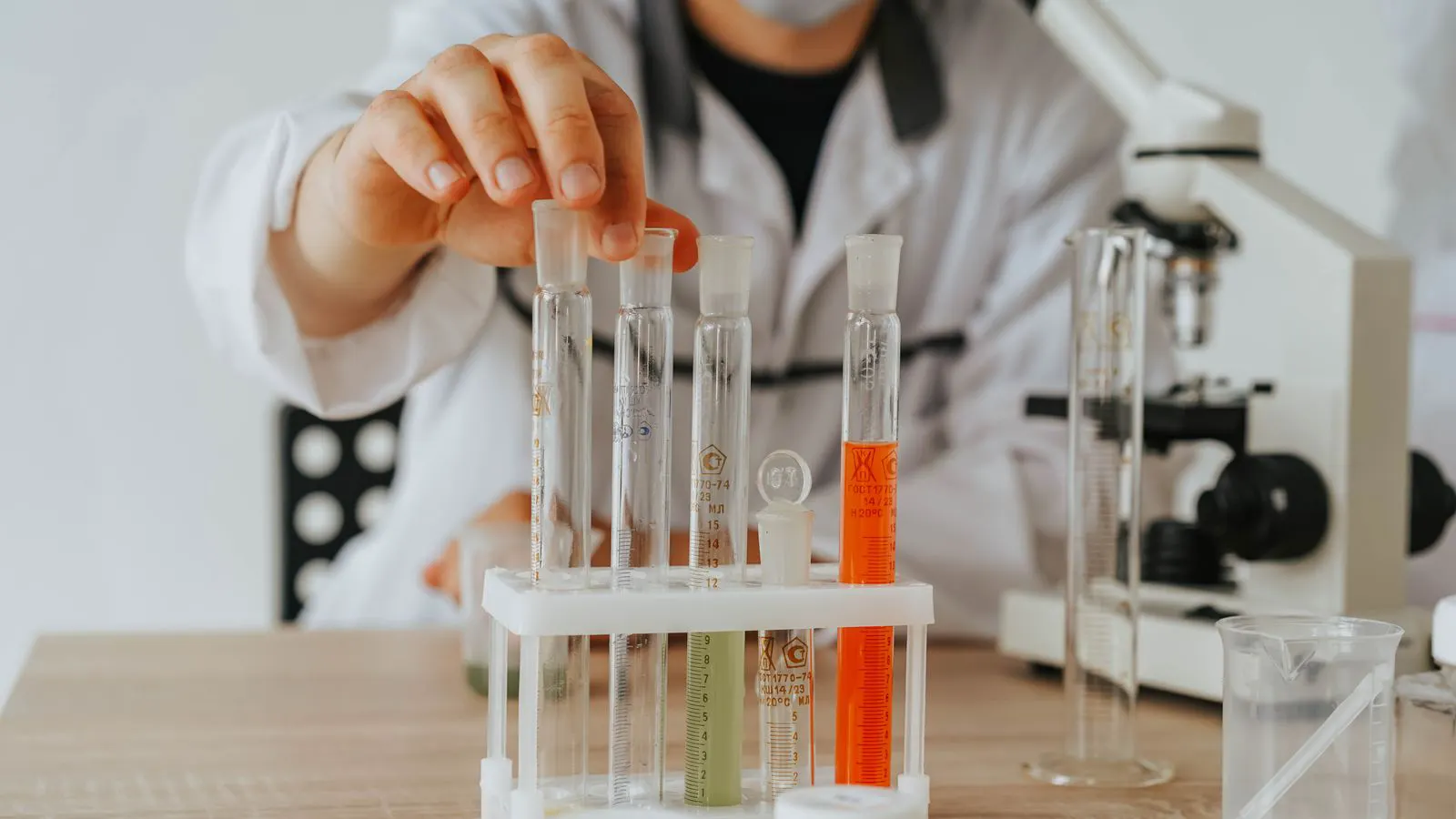
Product stability failures usually trace back to formulation gaps, raw material variability, or insufficient stress testing. Engineers can identify common symptoms like separation or texture shifts and apply targeted fixes. This guide covers diagnosis, corrective actions, and prevention steps for stable cosmetic batches.
- Product stability issues often appear as separation, texture changes, or color shifts after storage.
- Common causes include phase imbalance, raw material variability, and insufficient stress testing.
- Engineers should use structured troubleshooting tables and repeatable test protocols.
- Prevent recurrence by controlling raw material specs and documenting every formulation change.
- Stress testing under heat, cold, and light conditions is the fastest way to catch weak formulations.
A failed stability test can stop a mass production launch. Most cosmetic product stability issues stem from formulation gaps, raw material variability, or inadequate stress testing. Engineers need a clear method to diagnose symptoms, isolate causes, and apply fixes before scale-up.
Why does my cosmetic product separate after storage?
Separation is one of the most visible stability failures. It shows up as a clear liquid layer above the cream, oil pooling on the surface, or a distinct boundary between phases. The root cause is usually phase instability.
Most emulsions rely on surfactants, thickeners, or polymers to hold oil and water together. If the balance is off, the matrix weakens. Temperature swings during storage or transport can trigger this quickly. A formulation that holds at room temperature may break after a week in a hot warehouse.
Other causes include raw material substitution. A new batch of emulsifier may have slightly different HLB values, water solubility, or particle size. Even small shifts can change how the emulsion behaves over time.
A common mistake is relying on a single emulsification method. If the formulation depends heavily on high-shear mixing to stay together, it will likely fail under normal use. The emulsion needs a strong enough matrix to survive storage without constant mechanical input.
What causes texture changes in a cosmetic formula?
Texture drift is harder to see but equally damaging. A cream may start soft and grainy, or a gel may turn stiff or watery. These changes affect user experience and can signal deeper formulation problems.
The most frequent cause is water activity imbalance. If the formula absorbs moisture from air or loses water during storage, the thickening system changes. Hygroscopic ingredients can pull water into the phase, thinning the product. Conversely, low water activity can cause some components to crystallize, creating a gritty feel.
Another cause is ingredient migration. Pigments, fragrance, or actives can move out of their original phase over time. This changes the mouthfeel or skin feel, even if the product does not visibly separate.
Processing history also matters. If a batch was over-sheared, some polymers or emulsifiers can degrade. If it was under-sheared, the dispersion may not be uniform. Both paths lead to texture instability.
How do I diagnose the root cause before mass production?
Diagnosis requires a structured approach. Do not guess. Test systematically.
First, compare the failed batch against the reference batch. Check raw material batch numbers, processing time, temperature, and equipment settings. If the reference batch is stable and the test batch fails, the difference is in the input or process.
Next, run a simple visual and physical check. Look for separation, color change, odor, or phase boundary. Measure viscosity with a rheometer or Brookfield viscometer. Record the time and temperature of the measurement. A viscosity drop of even 10 percent can indicate emulsion breakdown.
Then, isolate the variables. Prepare three small test batches: one with the original raw materials, one with the new raw material lot, and one with a different processing time. Store them under identical conditions. After one to two weeks, compare the results. This isolates whether the problem is material-driven or process-driven.
If the issue is material-driven, the formulation may need a buffer. If it is process-driven, the manufacturing steps need adjustment.
What are the most common product stability problems and fixes?
The table below lists common symptoms, likely causes, and practical fixes. Use it as a starting point for troubleshooting.
| Symptom | Likely cause | What to do |
|---|---|---|
| Clear liquid layer above cream | Emulsion breakdown due to weak surfactant system | Increase emulsifier concentration or add a co-emulsifier; test with a higher viscosity base |
| Oil pooling on surface | Phase separation from temperature cycling | Improve thermal stability; reduce oil phase or add a thickeners that hold structure |
| Texture becomes grainy | Pigment or active ingredient migration or crystallization | Add a dispersant or surfactant to keep particles suspended; adjust pH if the active is pH-sensitive |
| Gel turns watery | Water activity shift or hydrogel breakdown | Adjust polymer concentration; control water activity with humectants |
| Color darkens or fades | Oxidation or light exposure of pigments/actives | Add antioxidants; use light-resistant packaging; reduce oxygen exposure during filling |
| Off-odor develops | Microbial growth or ingredient degradation | Check preservative efficacy; reduce water activity; improve sanitation during processing |
For each symptom, document the findings. A stability issue is not just a lab result. It is a formulation decision. If you increase an emulsifier to fix separation, record the new percentage, the reason, and the result. This documentation helps the next engineer understand the formula.
How can I prevent product stability problems before scale-up?
Prevention is cheaper than correction. Build stability into the formulation and the testing plan.
- Stress test early. Do not wait until the formula is locked. Run accelerated stability tests at elevated temperature and humidity, and cycle between heat and cold. A formulation that survives these cycles is far more likely to survive normal distribution.
- Control raw material variability. Ask suppliers for consistency data. Test incoming lots for key parameters. If a raw material is a critical component, specify tighter tolerances.
- Document every change. A new supplier, a new mixing speed, or a small pH adjustment can shift stability. Keep a formulation log that records what changed and why.
- Use a stability margin. Do not push the formulation to its limit. Leave room for normal variation in raw materials, equipment, and environment.
- Review packaging. The container can affect stability. Oxygen, light, and moisture all interact with the formula. Match the package to the product.
A common mistake is treating stability as a final check. It is a design parameter. If the formulation is on the edge, it will fail in the field.
What does a stable cosmetic product look like over time?
A stable product should perform the same at the end of shelf life as it does on day one. That means no separation, no texture shift, no color change, and no odor. The preservative should remain effective. The active ingredients should remain available.
Stability is not just about the bulk product. It matters at the point of use. A cream that separates in the bottle but re-mixes when pumped may be acceptable for some products. A gel that breaks after a few squeezes is not. Define the acceptance criteria for your specific product.
When a stability issue appears, treat it as a signal. It means something in the formulation, the process, or the packaging is not holding. Find the weak point, fix it, and verify the fix with a repeat test.
How do I verify the fix after a formulation change?
After applying a fix, do not assume it works. Run a short-term stability test. Store the revised batch under the same conditions that caused the original failure. Check the same parameters: separation, texture, color, viscosity, and odor.
If the fix works, document it. If it does not, return to the diagnosis step. A single change rarely solves a complex stability issue. Sometimes you need to adjust multiple variables at once.
Keep the test protocol simple. Use the same equipment, the same storage conditions, and the same measurement method each time. Consistency in testing is what makes the results useful.
If a formulation needs multiple fixes, consider whether the base system is the problem. Sometimes a small tweak to the emulsifier or thickener system gives a better result than a large change to the active ingredient load.
Stability work is iterative. The goal is not to avoid all failures. It is to find the failures early, understand them, and build a formulation that holds under real-world conditions.
Frequently asked questions
Can I fix separation by just stirring the product?
Stirring may temporarily mix the phases, but it does not fix the underlying instability. The product will likely separate again. You need to adjust the formulation or process to strengthen the emulsion.
How long should I run a stability test before mass production?
There is no single answer. It depends on the product, the raw materials, and the intended shelf life. A short accelerated test can catch major issues quickly, but a longer test gives more confidence.
What is the biggest cause of texture changes in lotions?
Water activity shifts are the most common cause. If the formula absorbs or loses water, the thickening system changes and the texture drifts.
Do I need to test stability for every new supplier?
Yes, if the supplier provides a critical ingredient. Even small changes in raw material properties can affect formulation performance. Test the new lot before using it in production.
What should I do if a stability failure happens after launch?
Stop the affected batch, identify the root cause, and apply a fix. Then run a short-term stability test on the corrected formulation before releasing the next batch.